🧮 06 — SHARED DNA COMMON ANCESTOR COUNTER
Type a crowd. We’ll find the ancestor every one of them shares — twice over.
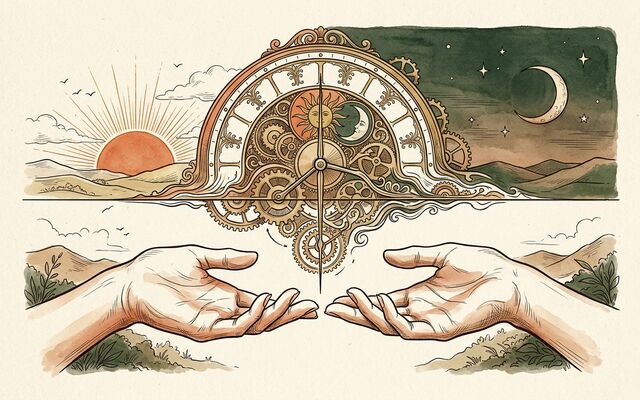
Two clocks run at completely different speeds. Follow the family tree and a crowd of 8 billion shares an ancestor roughly 33 generations back. Follow DNA — a single stretch of it — and the same crowd’s common ancestor is hundreds of thousands of years deep. Both answers are true. Enter any sample size, in any format.
Accepts 8 billion, 8,000,000,000, 300k or 8e9.
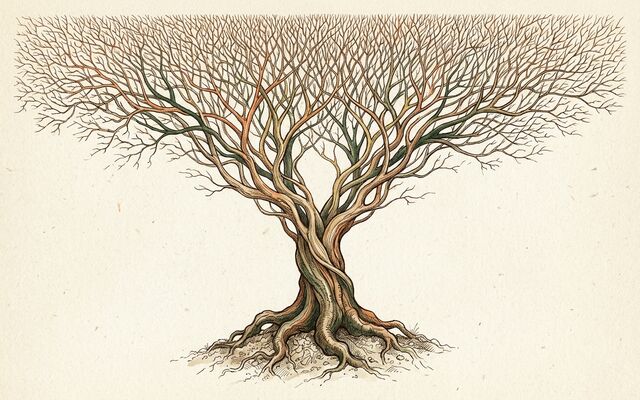
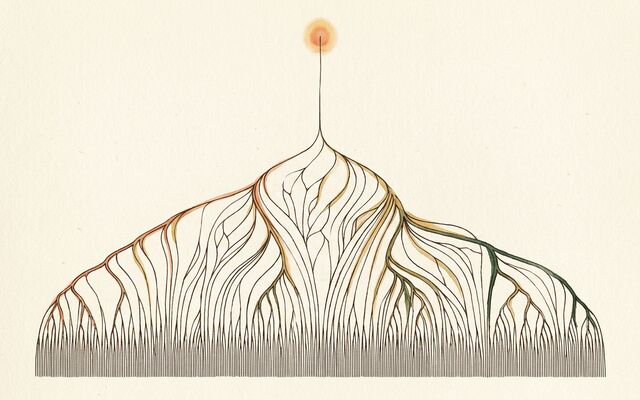
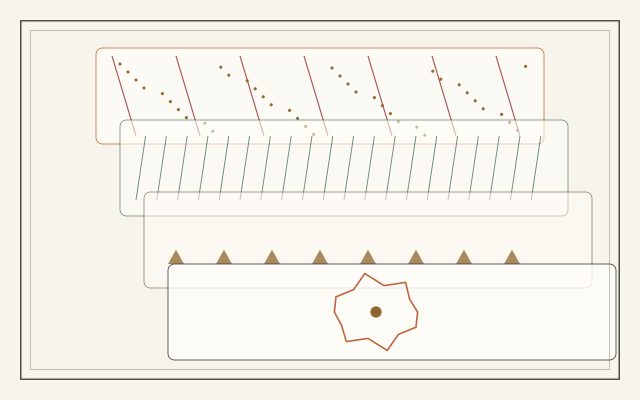
One random coalescent tree for a sample of that size (drawn with up to 48 tips; the maths behind the cards uses the whole sample). Watch the lineages merge: the last two lines to meet are the ancestor everyone in the sample shares.
Genealogical depth uses Chang’s 1999 result for a well-mixed population — the most recent common ancestor of a population of size N sits about log2N generations back, and the “identical ancestors point” about 1.77·log2N generations back. Ideal mixing is not the real world: with actual geography Rohde, Olson & Chang (Nature, 2004) put humanity’s shared ancestor nearer 3,000 years ago and the identical-ancestors point 5,000–15,000 years ago. Genetic depth uses the Kingman coalescent: E[pairwise] = 2Ne, E[TMRCA] = 4Ne(1 − 1/n), E[uniparental TMRCA] = Ne(1 − 1/n) generations. None of this describes you personally: it is a model of a sample, and Ne is a parameter, not a census.