🌗 08 — CROSS-BORDER CULTURAL HERITAGE GRID
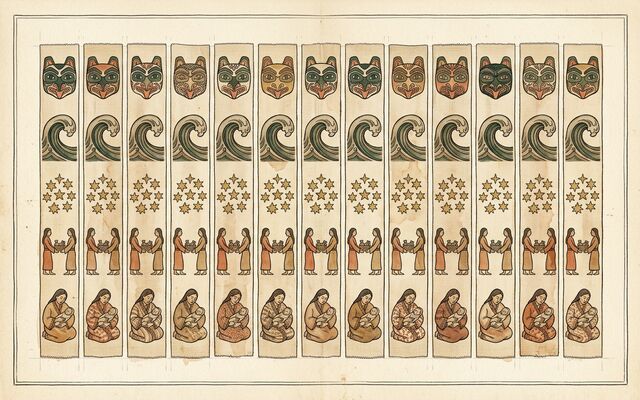
Fourteen peoples who never met. The same stories anyway.
Fourteen groups, fourteen language families or isolates, five continents and one island chain — separated in many cases by tens of thousands of years. Read across a row for one people; read down a column for a pattern that keeps returning. Pick a universal to light up every group that carries it.
All fourteen groups, four domains
Nothing is highlighted yet. Choose a universal above — tricksters, floods, the Pleiades, gift debts, songs for infants — and the grid will mark every group that carries it. Two societies can share a structure and still mean completely different things by it; this grid compares shapes, not beliefs.
Comparative ethnography, not a ranking: every cell is someone’s living tradition.
Side-by-side comparison: nothing selected yet.
Sources by universal are listed under each highlight. Key references: Mehr et al., “Universality and diversity in human song” (Science, 2019); Berlin & Kay (1969) on colour terms; Aikhenvald (2004) on evidentials; Stith Thompson’s Motif-Index for narrative types; Mauss (1925) and Sahlins (1972) on exchange; Douglas (1966) on the sacred. Contested claims are marked as contested in the grid — the Pirahã recursion and number-word debate (Everett 2005 vs. Nevins et al. 2009) is the clearest example. Universals describe patterns across many societies; they do not describe every individual in any of them, and none of these traditions is frozen in the past.