🙂 WHAT EVERY HUMAN DOES · 02
The Same Face
People born blind, who have never seen a face, make the same winning and losing expressions as everyone else.
If expressions are learned by watching other people, someone who has never seen a face should not have them. In 2009 David Matsumoto and Bob Willingham tested that on the cleanest natural experiment available: judo. Seventy-six blind athletes at the 2004 Paralympics, eighty-four sighted athletes at the 2004 Olympics, photographed in the seconds after a match ended.
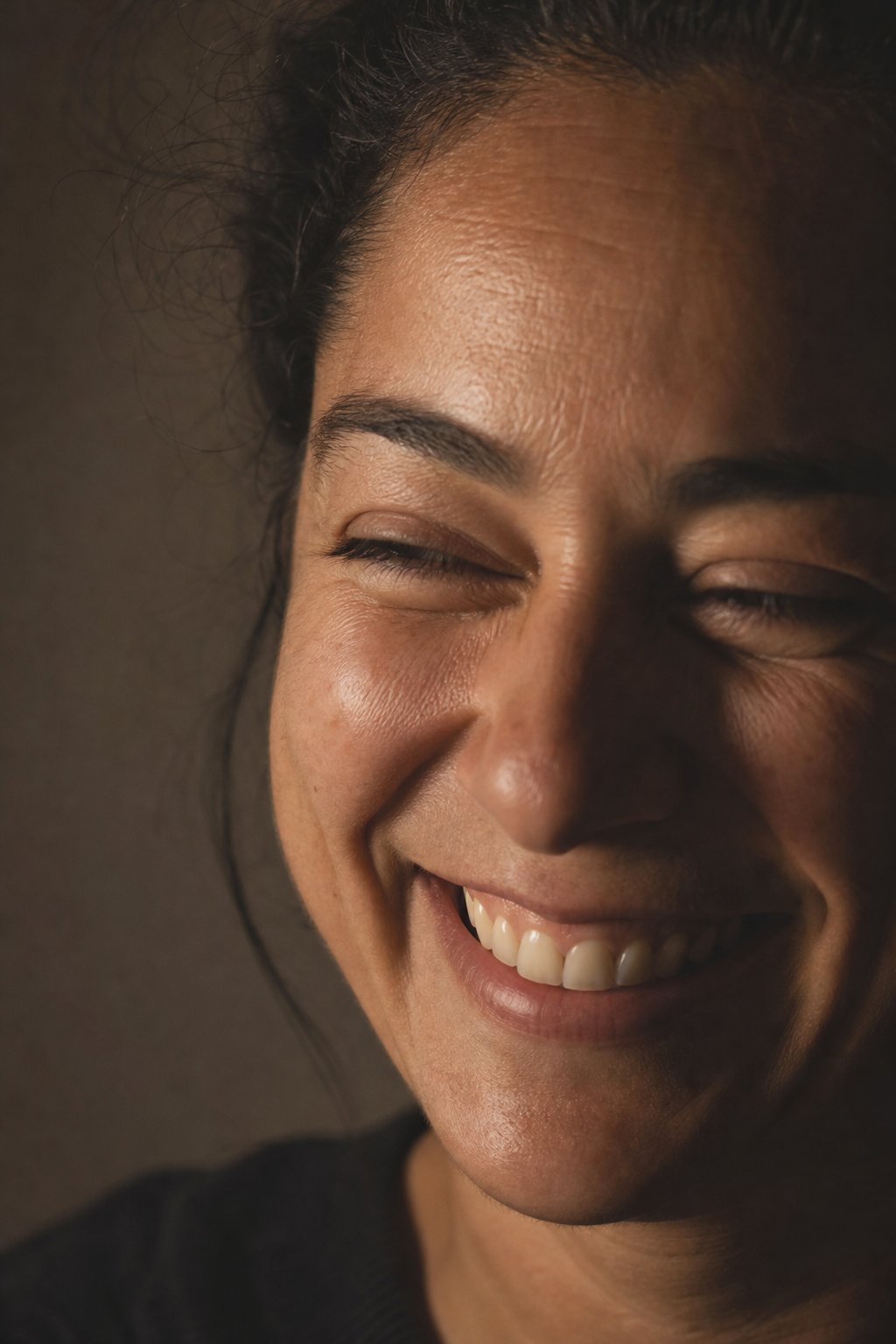
Two smiles, two kinds of athlete
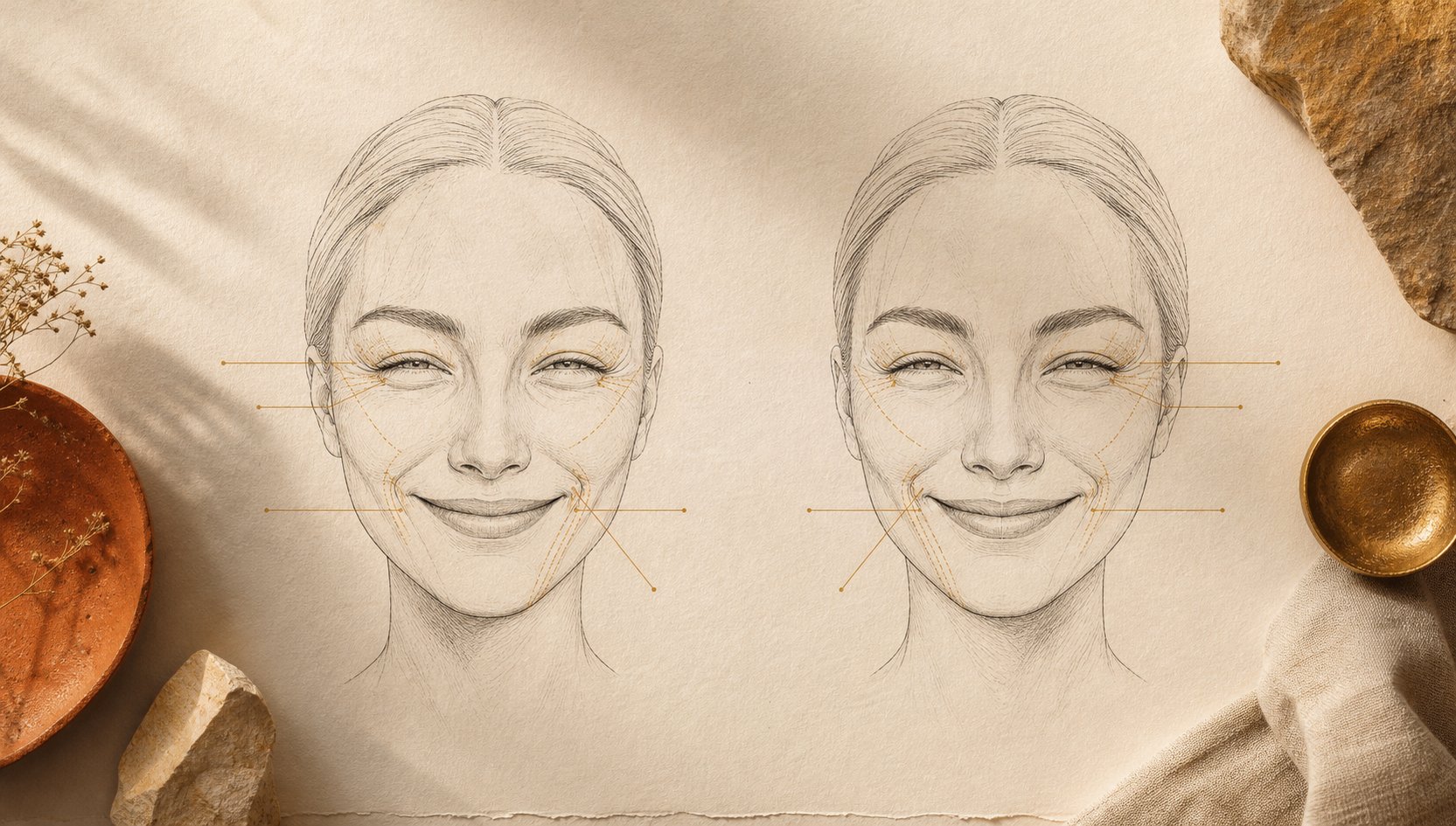
Switch between the felt smile and the social smile to see which muscles are doing the work. Then switch the athlete. The face does not change — and that is the result.
The drawing is a schematic, not a photograph and not a measurement. The muscle names are the ones the study identifies; the picture is here to show which of them a felt smile adds.
The two smiles
Duchenne described the difference in 1862: a genuine smile recruits the muscle around the eye as well as the one around the mouth.
What the study found
Where this is argued about
The blind-athlete result is strong evidence that some expressions are not learned by watching. Whether that settles the question of universal emotion categories is a genuine, unsettled argument.