🕸️ 07 — GLOBAL KINSHIP DISTANCE VISUALIZER
Pick any two people on Earth. Count the hands between them.
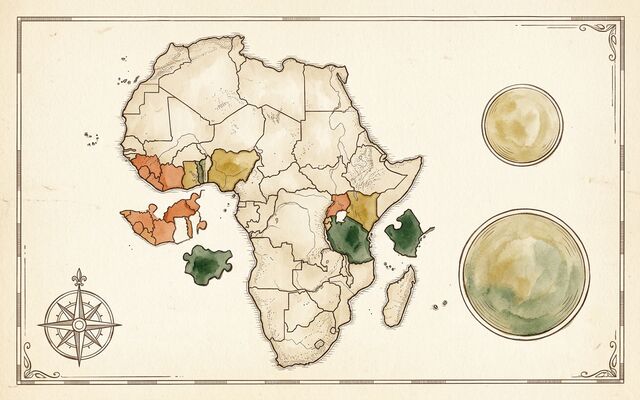
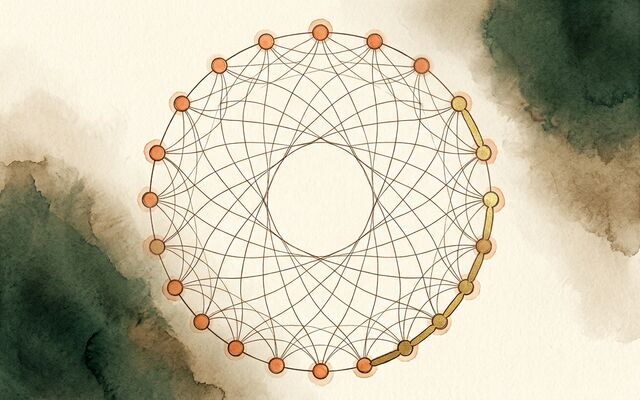
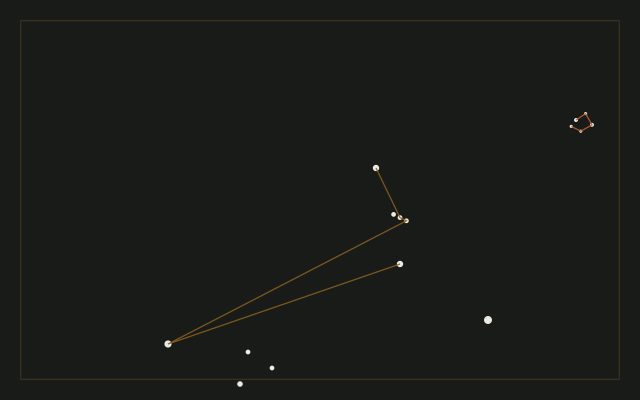
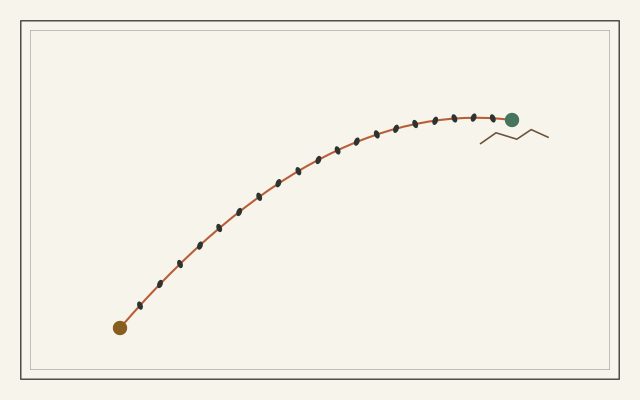
Choose two places — Lagos and Utqiaġvik, Port Moresby and Tromsø — and this draws the chain of intermediaries between them: every social handshake, plus every ancestral link. The claim under test is the one everyone has heard and nobody can verify by hand: fewer than 50 links separate any two people alive. The math, not the anecdotes, decides it below.
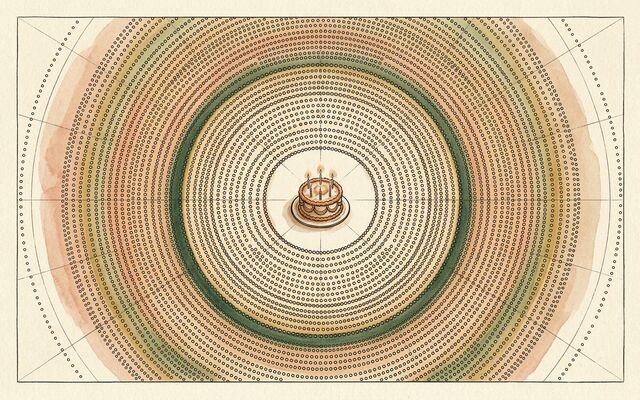
Every pair, at a glance: darker means more links. Hover a cell to see the pair; click it to draw that chain. The worst pair on the grid still lands far below 50.
Why the 50-link ceiling always holds: with N people and b introductions per link, a chain reaches anyone in about logbN links. Even at the extreme where each link introduces you to only two new people, 8.2 billion people is only 33 links away — and the most barrier-heavy pair on this grid adds four. The red line is the claim.
This models a chain, it does not trace one. The logbN result comes from small-world random-graph theory (Milgram’s 1967 “small world” experiment measured about 5–6 intermediaries in the United States; Watts & Strogatz 1998 generalised it). The branching slider stands in for how many people any one person could realistically introduce you to — roughly Dunbar’s 150 for a maintained network, far fewer for weak ties. Barrier counts here (continent change, ocean crossing, terrain isolation) are a modelling choice for this page, not measured mobility data. Ancestral links follow the same logarithmic law with b = 2, which is why 33 generations covers all of humanity.